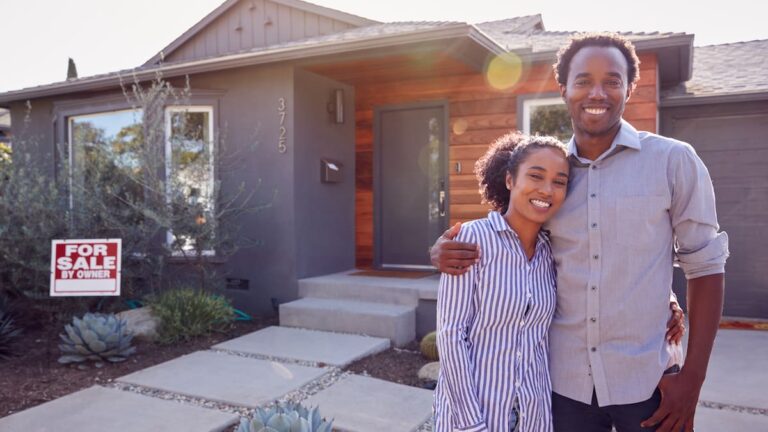


Selling your home is a big deal and, let’s be honest, it can take a serious bite out of your wallet thanks to realtor commission that often hovers around 5-6% of your home’s selling price. That’s $20,000-30,000 for the average-priced U.S. home!
Luckily, these fees aren’t carved in stone. From working with a brokerage that offers commission savings off the bat, to negotiating the fees on your own, here are some of the best ways to save on realtor fees — or avoid them altogether.
⚡️ Get a better agent at a better rate. Clever Real Estate connects thousands of sellers top local agents offering exclusive savings through their network. Answer a few simple questions, compare agents and qualifications, and sell for about half the typical listing fee.
💡 How real estate commission works
Traditionally, home sellers have been responsible for paying a commission to each agent involved in their home sale:
- The listing agent would earn a 2.5–3% listing fee for their services in marketing and selling the home.
- The buyer's agent would receive a 2.5–3% buyer's agent fee for representing the buyer who purchased the home.
However, recent industry changes following the National Association of Realtors (NAR) settlement have created more flexibility in how commissions are structured:
- Sellers are no longer required to offer compensation to buyer's agents
- Buyers may now directly negotiate their agent's fees
- Listing agents can no longer advertise buyer's agent commissions in the MLS
Despite these changes, most sellers still choose to offer a buyer's agent concession (typically 2.5–3%) to attract more potential buyers and ensure their property receives maximum exposure.
Here's what realtor commission looks like on a $500,000 house, assuming you pay 3% to each agent:
| Commission rate | Cost | |
|---|---|---|
| Listing agent | 3% | $15,000 |
| Buyer's agent | 3% | $15,000 |
| Total | 6% | $30,000 |
Realtor fees are deducted from the seller's proceeds at closing, so you don't pay anything upfront. However, the costs can easily add up to several thousand dollars. So, it's logical to ask how you can save.
How to save on realtor fees in 2026
1. Find a top low commission realtor
The easiest way to save on realtor commission is by working with a company that offers built-in savings.
Top-rated options like Clever Real Estate and Ideal Agent offer pre-negotiated rates with qualified real estate agents from around the country — providing top-notch service for about half the typical rate (1.5–2% vs. 3%).
However, not all low commission agents provide the same value for the money. Options for low-commission realtors include full-service and limited-service realtors. Here's a quick comparison below:
- Full-service low commission realtors offer the same range of services as traditional agents but at a lower cost. These include in-person consultations, pricing strategies, professional photos, managing showings and open houses, and assisting with offers, negotiations, and paperwork.
- Limited-service agents are cheaper than full-service agents, but typically provide fewer services, often focusing just on essential tasks like listing your property on the MLS, leaving other responsibilities like hosting showings, photography, and negotiations up to you.
Unsure of where to look? Here are some of the top low commission real estate companies to consider:




To get the best value, carefully choose a low commission realtor who matches your specific needs and ensures you don't sacrifice quality for cost.
2. Negotiate a lower rate yourself
Just as you can haggle over the price of a new home purchase, you can also negotiate realtor fees. However, recent data from Redfin indicates that only about half of home sellers even attempt it.[1]
Home sellers that do try to negotiate have somewhat mixed results.
- According to the study, 25% of recent home sellers successfully negotiated the commission rate with their listing agent.
- A smaller fraction, about 12%, attempted to negotiate, but without success.
How to negotiate realtor commission
According to agents we've spoken to, the following tactics that could increase your chances of success when negotiating a lower realtor commission:
🤝 Offer repeat business. What’s better for a real estate agent than earning one commission? Earning two! If you plan to sell your house and buy another, you may have extra leverage when negotiating with your agent. The same is true for investors with a steady stream of properties to sell. "If a seller is also buying with us, or they’re an investor listing multiple properties, we’ll absolutely look at the total business and make adjustments," says Shane Parker of S&P Realty in Grosse Pointe Park, Michigan.
🏡 Make the house easy to sell. Have an attractive home in a desirable area? That's one more lever you can pull during commission negotiations. "If a seller can offer a clean, market-ready property in a hot area — and they’re realistic about pricing — I’m more open to discussing a flexible commission structure, especially if the property will likely move quickly with minimal friction," says Parker.
💰 Offer performance-based bonuses. With performance-based commission, you and your agent agree to a certain baseline rate. However, you also agree that your agent will earn additional compensation for hitting certain targets — such as securing an offer above the asking price, selling the house within a certain timeframe, or securing favorable terms like an expedited closing date or all cash sale. This type of arrangement aligns the agent's compensation with your goals as a seller.
3. Shop around for the best value
Most people (81% of sellers and 75% of buyers) commit to the first real estate agent they speak to.[2] However, letting potential agents know that you’re interviewing multiple realtors may make them more willing to cut you a deal to earn your business.
It’s smart to shop around for practical reasons, too. Each agent brings a different combination of experience, knowledge, and professionalism to the table. Some agents may sell only one or two homes per year, while others may be top sellers several years running. Some may be comfortable using data to help guide you toward a competitive listing price, while others may be happy to sit back and let you set the listing price.
A good realtor can more than pay for themselves through their pricing, marketing, and negotiating skills. So talk to a few different realtors until you find the agent you trust to do the best job of selling your home.
⚡ Find top local realtors from major brands like Keller Williams, Berkshire Hathaway, and RE/MAX — and get a pre-negotiated listing fee of just 1.5%. Answer a few quick questions, compare agent profiles side by side, and select the perfect match — no added fees or obligation to move forward.
4. Sell without a realtor
Selling your home without an agent, or "for sale by owner" (FSBO), is perhaps the most obvious way to avoid realtor fees as a seller. By eliminating the listing agent, you eliminate their commission.
However, selling without a realtor doesn't guarantee any savings. Many homeowners who attempt FSBO end up selling their house for less than if they'd hired an agent in the first place.
- A survey of more than 650 recent home sellers found that those who used an agent earned an average of $79,000 more from their home sale than those who did not.[3]
- Similarly, data from NAR shows that homes sold without a realtor go for an average of 13% less than homes sold with a realtor's help. That's a difference of roughly $65,550 on a $500,000 house.[4]
- By comparison, the average listing agent commission on a $500,000 is $12,000—$15,000 (or 2.5–3%).
Perhaps that's a major industry study found that only 6% of sellers went the FSBO route in 2024.[4] Still, FSBO may be advantageous in particular situations.
Who FSBO works best for
FSBO may be right for you if you have experience in real estate or have a realtor who's willing to offer their advice for free. This is especially true if you're in a competitive market where homes receive quick offers, and you have a desirable property that's likely to attract buyers easily.
However, it's still highly recommended to list your home on the Multiple Listing Service (MLS) through a flat fee MLS listing service. Additionally, consulting a real estate attorney can ensure that all legal aspects of your sale are correctly managed, reducing your legal risk.
🏠 What are flat fee MLS listing services?
Only licensed agents can list properties on the local MLS, which is essential for visibility as it syndicates listings to major websites like Redfin and Zillow.
If you opt for the FSBO approach but still want broad exposure, consider using a flat fee MLS service. For a few hundred dollars, these services will list your home on the MLS, ensuring it appears on major real estate sites just like those sold by agents.
However, be aware that flat fee MLS services generally provide only the listing service without additional agent support like pricing, showings, negotiation, or closing assistance (they might offer some basic add-ons such as photos or for-sale signs.)
5. Sell to a cash home buyer
You can eliminate realtor commissions entirely by selling your home to a real estate investor or "We Buy Houses" company.
This method involves no agents, saving you the 5-6% commission typically associated with traditional sales. Selling to a cash buyer also offers several other advantages, such as the possibility of a fast, all-cash transaction, with no need for repairs or appraisals. Many cash buyers will also let you choose your move out date and cover traditional closings costs, such attorney and title fees.
Just know that you won’t receive the full market value for your home. Cash investors usually pay about 30% less than what your home could potentially sell for. So, it's usually only suitable for homes in poor condition that you need to sell fast. In these cases, a cash buyer may be able to offer you a fair deal with far less hassle and no upfront expense.
If you're curious what an investor might offer for your home, an offers marketplace like Clever Offers provides a quick way to compare cash offers from a variety of sources, ranging from nationwide iBuyers to local investors.
If you prefer to browse, our team has researched hundreds of companies and compiled lists of the best cash home buyers for all 50 states and Washington, DC.
FAQ
How much are realtor fees?
Average realtor fees are typically 5-6% of the final sale price, though this average is falling across the U.S. This commission is commonly split between the listing and buyer's agents, with each usually receiving around half. To put it into perspective in terms of actual dollars: on a home priced at $250,000, a 5% commission totals approximately $12,500; for a $500,000 home, this rate would result in a commission of $25,000.
Who pays realtor fees?
Traditionally, the seller pays the realtor fees from the sale proceeds because both agents facilitate the sale: the listing agent markets the home, and the buyer's agent brings in the buyer. However, recent industry changes from the NAR lawsuit settlement are shifting this norm. Now, buyers and sellers often negotiate realtor commissions more transparently, which may lead to some buyers sharing some of these costs.
Are real estate commissions negotiable?
Yes, real estate commissions are negotiable. The National Association of Realtors (NAR) lawsuit has increased transparency, making it easier to discuss lower rates. To negotiate effectively, understand your local average commission rate, and offer value like a well-prepared home or handling some tasks yourself. Exploring multiple agents and comparing service models can also provide leverage. Alternatively, services like Clever Real Estate connect you with top-rated agents at reduced rates, such as 1.5%, simplifying the process while ensuring savings.
When do you pay realtor fees?
Realtor fees are typically deducted from the sale proceeds at closing. These fees are then distributed to the brokerages representing the listing and buyer's agents. Each brokerage subsequently pays their respective agents based on the agreed-upon commission split.
Related reading